Training Course on GIS in Disaster Risk Management (GIS005)
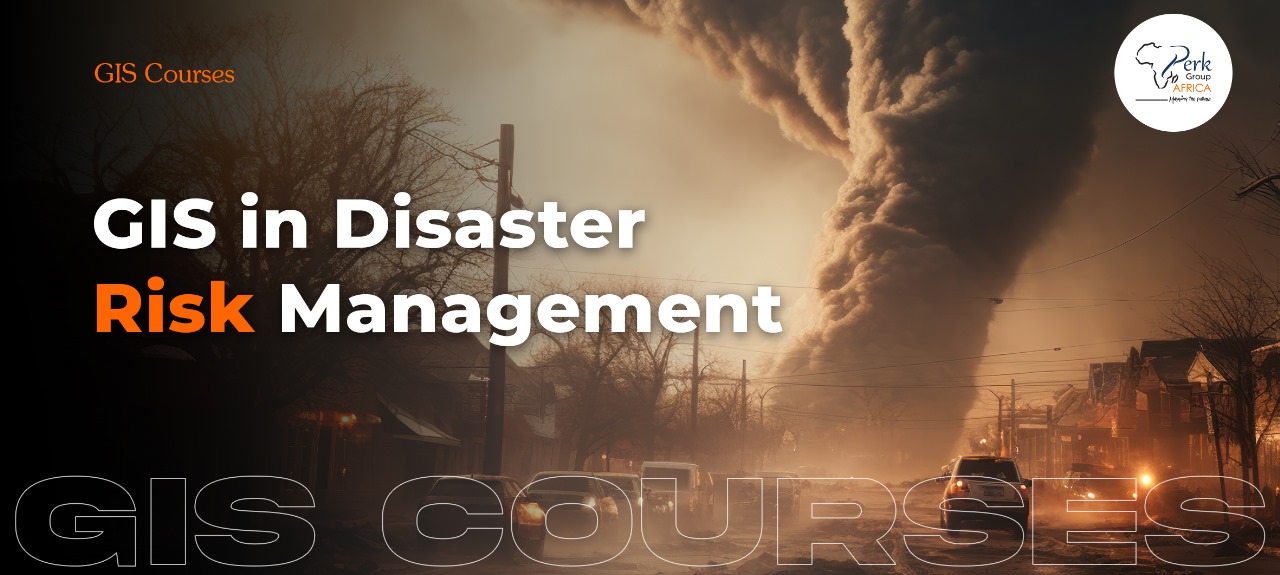
Training Course on GIS in Disaster Risk Management
This GIS in Disaster Risk Management course will equip participants with the knowledge of the use of Geographic Information Systems (GIS) in managing and mitigating disaster risks. This course is designed for professionals and practitioners involved in disaster management, emergency response, and resilience planning who want to leverage GIS technology to enhance their decision-making processes and improve disaster preparedness.
Through practical examples and hands-on exercises, participants will learn how GIS can assist in analyzing and visualizing spatial data to identify and assess hazards, vulnerabilities, and risks. They will acquire the skills to develop and implement GIS-based disaster management strategies, including spatial modeling, risk mapping, and scenario planning.
Course Duration
Online Training: 7 days (4hrs per day)
Classroom Training: 5 days (7hrs per day)
Course Objectives
By the end of this course, participants will be able to:
- Understand the role of GIS in disaster risk management (DRM) and emergency preparedness.
- Collect, manage, and integrate spatial data relevant to disaster risk, vulnerability, and resilience analysis.
- Apply GIS tools and techniques for hazard assessment, risk mapping, and vulnerability analysis.
- Utilize GIS for emergency response planning, including evacuation route optimization and decision support.
- Conduct spatial analyses to support resilience planning and post-disaster recovery.
- Develop GIS-based strategies for disaster risk reduction and adaptive management.
- Communicate GIS findings effectively to support decision-making and stakeholder engagement.
Organisational Impact
Organizations whose staff attend this course will benefit from:
- Enhanced disaster preparedness: Ability to use GIS for risk assessment, early warning, and emergency response planning.
- Improved decision-making: Spatial analysis helps prioritize interventions, allocate resources efficiently, and reduce disaster impact.
- Effective risk communication: Risk maps and visualizations facilitate communication with stakeholders, communities, and authorities.
- Strengthened resilience planning: GIS enables identification of vulnerable areas and monitoring of risk reduction strategies.
- Data-driven post-disaster recovery: Spatial insights improve planning, assessment, and implementation of recovery programs.
- Operational efficiency: GIS-supported workflows improve coordination among disaster management teams and agencies.
Personal Impact
Participants will gain:
- Technical GIS skills for DRM: Competence in collecting, managing, analyzing, and visualizing spatial data for hazards, risks, and vulnerabilities.
- Analytical capacity: Ability to interpret risk maps and spatial data to support decision-making in emergencies.
- Professional confidence: Apply GIS for disaster preparedness, response, and resilience planning in real-world scenarios.
- Problem-solving skills: Use GIS tools to model scenarios, optimize evacuation routes, and support situational awareness.
- Career development: Enhanced employability and relevance in disaster management, humanitarian aid, and resilience planning sectors.
- Certification: A certificate of completion validating their expertise in GIS applications for disaster risk management.
Course Outline
Module 1: Introduction to GIS in Disaster Risk Management
- Understanding the Role of GIS in disaster risk management
- Overview of key concepts and Principles in disaster risk reduction
- Introduction to GIS software and tools for disaster risk management
- Introduction to spatial data types and Sources for disaster risk analysis
Module 2: Data Collection and Management for Disaster Risk Management
- Methods and Techniques for collecting spatial data in disaster risk management
- Data quality assurance and management
- Georeferencing and spatial data integration
- Introduction to disaster risk data standards and interoperability
Module 3: Hazard Assessment and Risk Mapping
- Identifying and assessing different types of hazards
- Spatial analysis techniques for hazard mapping and vulnerability assessment
- Developing risk maps and impact assessments using GIS
- Integration of hazard data with demographic and infrastructure data
Module 4: Emergency Response and Preparedness
- Role of GIS in emergency Response and decision-making
- Spatial analysis for evacuation planning and route optimization
- Real-time data integration and visualization for situational awareness
- Creating decision support systems for emergency operations centers
Module 5: Resilience Planning and Post-Disaster Recovery
- GIS applications in resilience planning and adaptive management
- Spatial analysis for identifying vulnerable areas and prioritizing interventions
- Assessing the effectiveness of disaster risk reduction measures using GIS
- Case Studies and best practices in GIS for disaster risk management
Note: The specific content, activities, and duration of each session may be adjusted based on the target audience, learning objectives, and available time.
Course Language
English
Training Methodology
The course employs a hands-on, practical, and interactive approach, combining lectures with exercises to ensure participants can apply GIS effectively in DRM contexts. Key methodologies include:
- Interactive Lectures: Introduce key concepts, GIS tools, and disaster risk management frameworks.
- Hands-On GIS Exercises: Step-by-step practice in hazard mapping, vulnerability assessment, and risk analysis using real or simulated datasets.
- Spatial Analysis Practice: Participants perform GIS analyses for evacuation planning, route optimization, and risk mapping.
- Scenario-Based Learning: Simulated disaster events and case studies to apply GIS for decision-making and emergency preparedness.
- Visualization and Communication Exercises: Create maps, dashboards, and reports to communicate disaster risks and recommendations effectively.
- Group Discussions and Collaborative Work: Encourage peer learning, problem-solving, and sharing of experiences.
- Real-World Case Studies: Examination of successful GIS applications in disaster risk management, resilience planning, and post-disaster recovery.
- Continuous Feedback: Trainers provide guidance, troubleshooting, and support during exercises and project-based tasks.
Certification
Upon completion of training, the participant will be issued with a certificate of Completion.
Frequently Asked Questions
Common questions about the Training Course on GIS in Disaster Risk Management course.
GIS for disaster risk management uses spatial data and analysis across all phases of the disaster cycle: prevention (hazard mapping, vulnerability analysis), preparedness (evacuation route planning, shelter location optimisation), response (damage assessment, resource deployment, situational awareness mapping), and recovery (rebuilding prioritisation, livelihood restoration). The Sendai Framework for Disaster Risk Reduction explicitly calls for risk-informed decision-making, and most national disaster management agencies and humanitarian responders now run GIS as a core capability through tools like QGIS, ArcGIS, OpenStreetMap, and InaSAFE.
Hazard mapping is the spatial representation of where natural or human-induced hazards may occur — flood zones based on rainfall and terrain, earthquake zones based on fault lines, landslide susceptibility based on slope and soil, drought-prone areas from historical rainfall data, conflict-risk zones from event reports. Hazard maps form the input to vulnerability and risk analysis (combining hazard with exposure and capacity). They're produced by national agencies (Kenya Meteorological Department, UNDRR, USGS) and humanitarian platforms (ReliefWeb, ACAPS) and form the foundation of any DRR programme.
The Sendai Framework for Disaster Risk Reduction (2015-2030), adopted at the Third UN World Conference on Disaster Risk Reduction, explicitly calls for risk-informed decision-making, evidence-based planning, and accessible disaster data. It sets seven global targets and four priorities — including "understanding disaster risk" and "investing in disaster risk reduction for resilience" — that depend on GIS and spatial analysis as foundational tools. Sendai-compliant national plans require hazard mapping, vulnerability assessments, and exposure databases, making GIS competency a core requirement for DRR practitioners working with government agencies.
DRM and emergency officers, humanitarian GIS analysts, local and national government planning and disaster management departments, Red Cross/Red Crescent staff, and INGOs working on flood, drought, landslide or earthquake risk.
Hazard mapping (flood, drought, landslide), exposure and vulnerability analysis, evacuation route and facility-location modelling, damage assessment using post-event imagery, early-warning system cartography, and integrating remote sensing into risk products.
Basic GIS familiarity is strongly recommended — if you have not used QGIS or ArcGIS before, take our Introduction to Mapping using QGIS course first. Participants here typically already produce simple maps and want to build applied DRM workflows on top.
Online and in-person at our training venues across Nairobi, Kigali, Mombasa, Lagos, Cape Town, Addis Ababa, Juba, Cairo and Dubai. Both formats issue the Perk Group Africa certificate of completion with a verification code, accepted for CPD records across the humanitarian and DRR community.
Related Courses
Explore more courses in GIS Courses