
Accounting & Financial Management
About our Accounting & Financial Management training
Perk Group Africa delivers practical, certified training on financial management, accounting and budgeting for finance professionals across Africa. Courses cover IFRS principles and disclosures, QuickBooks for NGO accounting, financial modeling and valuation, advanced cash flow and working capital management, NGO budgeting, financial planning and FP&A, fundraising strategy, grants management, donor compliance (USAID 2 CFR 200, EU PRAG, FCDO, Gates, UN HACT), project cost management, and finance-for-non-finance-managers. Participants are NGO finance officers, grant accountants, ACCA/CPA-K candidates, CFOs, controllers, FP&A analysts, treasurers and programme managers. Each course runs online (live-instructor-led) and in-person at our training venues across Nairobi, Kigali, Mombasa, Lagos, Cape Town, Addis Ababa, Juba, Cairo and Dubai, with a verifiable certificate of completion.
Training Course in Budgeting and Cost Control for NGOs
This course provides an in-depth understanding of budgeting and cost control tailored for NGOs, emphasizing the use of advanced Excel tools. Participants will learn to prepare comprehensive budg...
REGISTER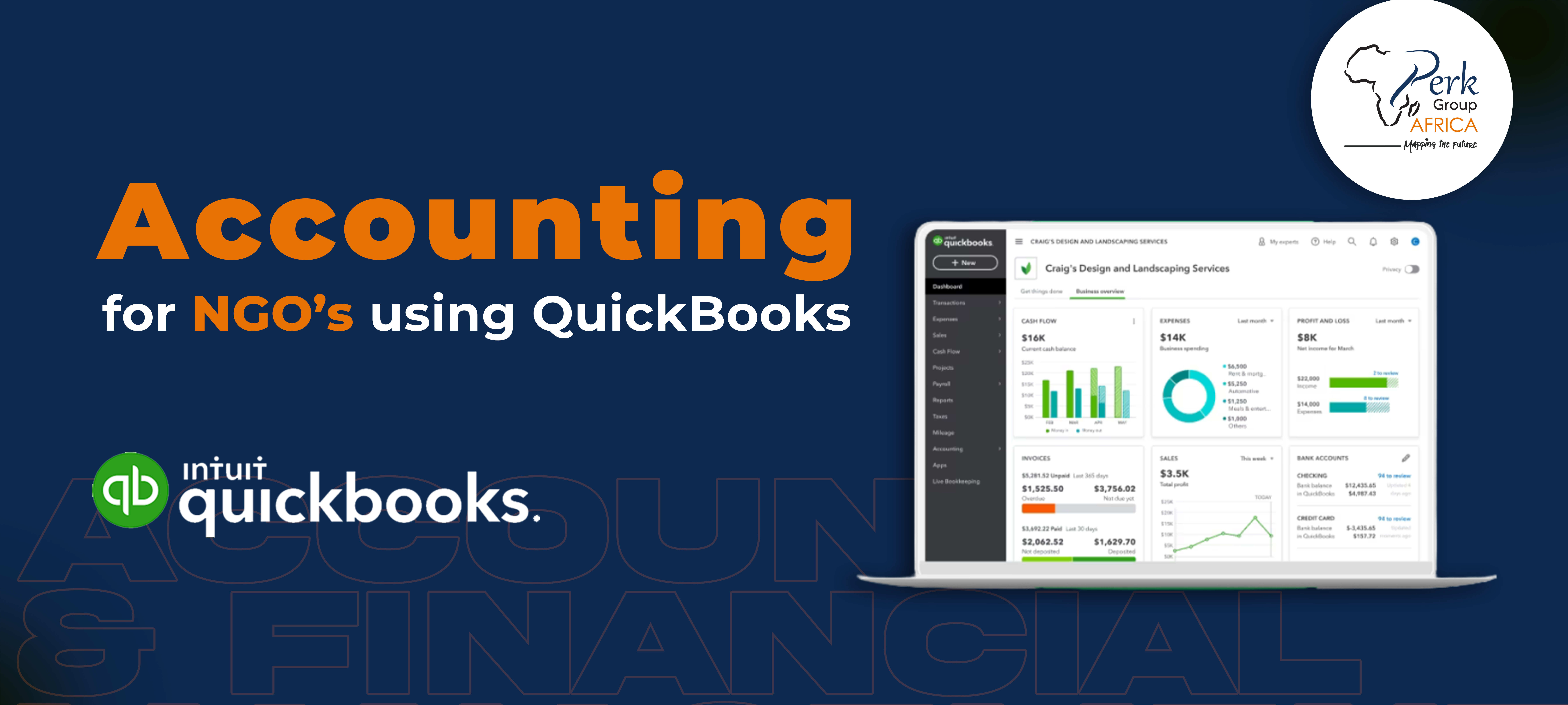
Training Course on Accounting for NGOs using QuickBooks
The Accounting for NGOs using QuickBooks training is designed to provide participants with comprehensive knowledge and practical skills in using QuickBooks for accounting in Non-Governmental Org...
REGISTER
Training Course on Advanced Cash Flow and Working Capital Management
This Advanced Cash Flow and Working Capital Management training course provides participants with not only the theoretical framework but also the practical tools and methodologies necessary to enhance...
REGISTER
Training Course on Cost Estimation Budgeting and Cost Control
The Cost Estimation Budgeting and Cost Control training is designed to equip participants with the essential skills and knowledge required for effective cost estimation, budgeting, and cost cont...
REGISTER
Training Course on Financial Analysis Planning and Control
This comprehensive course is designed to provide participants with the essential skills and knowledge needed to perform effective financial analysis, develop strategic financial plans, and imple...
REGISTER
Training Course on Financial Management for Donor-Funded Projects
This course is designed to equips participants with the knowledge and practical skills necessary to navigate the unique financial management challenges associated with donor-funded projects.&nbs...
REGISTER
Training Course on Financial Management for Non-Finance Executives
Financial management is a critical aspect of business operations, impacting decision-making across all levels of an organization. This comprehensive workshop is tailored specifically for non-fin...
REGISTER
Training Course on Financial Planning Budgeting and Forecasting
Budget planning and forecasting are two of the most important tasks that provide direction and financial objectives of an organization. This course is designed to equip participants with the kno...
REGISTER
Training Course on Fundraising and Resource Mobilization
In today’s competitive landscape, organizations—especially those in the nonprofit and humanitarian sectors—face increasing challenges in securing sustainable funding. Fundraising and resource mobiliza...
REGISTER
Training Course on Grants Management
The Training Course on Grants Management is designed to equip participants with the essential knowledge and skills needed to effectively manage grants throughout their lifecycle. This comprehens...
REGISTER
Training Course on International Financial Reporting Standards
The International Financial Reporting Standards (IFRS) course offers a comprehensive exploration of the principles, concepts, and practical applications of global financial reporting standards....
REGISTERAccounting & Financial Management — Key Concepts Explained
The definitions and frameworks our accounting & financial management training is built on.
NGO financial management is the practice of planning, controlling, reporting and safeguarding the financial resources of non-profit organisations. It differs from corporate finance in key ways: revenue comes from grants and donations rather than sales, expenditure is restricted by donor agreements, accountability is to donors and beneficiaries (not shareholders), and reporting must comply with both donor frameworks (like USAID 2 CFR 200) and national NGO regulations. Strong NGO financial management combines strict fund tracking, programme-specific budgeting, donor reporting compliance, internal controls and audit-readiness.
Grants management is the end-to-end administration of donor funding — from pre-award proposal development through award negotiation, implementation monitoring, financial and narrative reporting, audit and close-out. It sits at the intersection of programmes, finance and compliance. Effective grants management ensures donor compliance (EU PRAG, USAID FAR/AIDAR, FCDO PCG, UN-managed funds), accurate burn-rate tracking, sub-grantee due diligence, and timely reporting. Failures in grants management — late reports, ineligible costs, missing supporting documents — are among the most common reasons donors flag organisations for restricted-status or grant suspension.
Fund accounting is the accounting method used by non-profits and government bodies to track financial activity by fund (or project) rather than by overall profit and loss. Each grant, project or restricted donation is treated as its own fund with separate revenue, expenditure, and balance — even though they all sit within one organisation. This makes donor reporting accurate, restricts cross-fund spending, and supports audit trails. QuickBooks, Sage Intacct, and Sun Systems all support fund accounting through class/project tagging, and most NGO finance staff need fluency in the approach.
IFRS — International Financial Reporting Standards — are the globally-adopted accounting standards developed by the International Accounting Standards Board (IASB). They prescribe how transactions and events are recognised, measured, presented and disclosed in financial statements. NGOs increasingly adopt IFRS (or IFRS for SMEs) to support cross-border donor compliance, lender requirements and audit harmonisation. IFRS adoption affects revenue recognition (especially grants — IFRS 15 / IPSAS 23), lease accounting (IFRS 16), and impairment of assets — areas where NGO accounting commonly needs upskilling.
Fundraising and resource mobilization is the strategic and tactical process of securing financial and in-kind resources from a diverse base — institutional donors, foundations, corporates, individuals, and earned income. Strong resource mobilization combines a clear case for support, donor mapping, prospect research, proposal development, and stewardship of existing funders. The shift from grant-dependence to diversified income — including social enterprise, fee-for-service, individual giving — is a strategic priority for most African NGOs as traditional donor funding contracts.
Cash flow management is the practice of forecasting, monitoring and controlling cash inflows and outflows so that an organisation can meet its obligations on time. Working capital management focuses on current assets and current liabilities — inventory, receivables, payables, short-term debt. For NGOs running multiple grant-funded projects, cash flow planning is critical because donor disbursement is rarely matched to expenditure timing — requiring careful tranche scheduling, advance projections, and reserves. Weak cash flow management causes payroll delays, supplier disputes, and reputational damage with donors.