Project Management
About our Project Management training
Perk Group Africa delivers project management training aligned with the PMBOK framework and tailored for the programmes and projects that run across African development, humanitarian and commercial sectors. Courses include end-to-end Project Management (planning, execution, control, closure), Project Planning & Management with practical tools (WBS, Gantt scheduling, risk registers, stakeholder maps), Results-Based Management, Logical Framework Approach (LFA), report writing & presentation skills, and Training-of-Trainers (ToT). Participants are project managers, team leads, programme officers, proposal writers and coordinators working on donor-funded or privately-financed projects. Training is delivered online and in-person across Nairobi, Kigali, Mombasa, Lagos, Cape Town, Addis Ababa, Juba, Cairo and Dubai, with a Perk Group Africa certificate of completion and verification code issued to every participant.
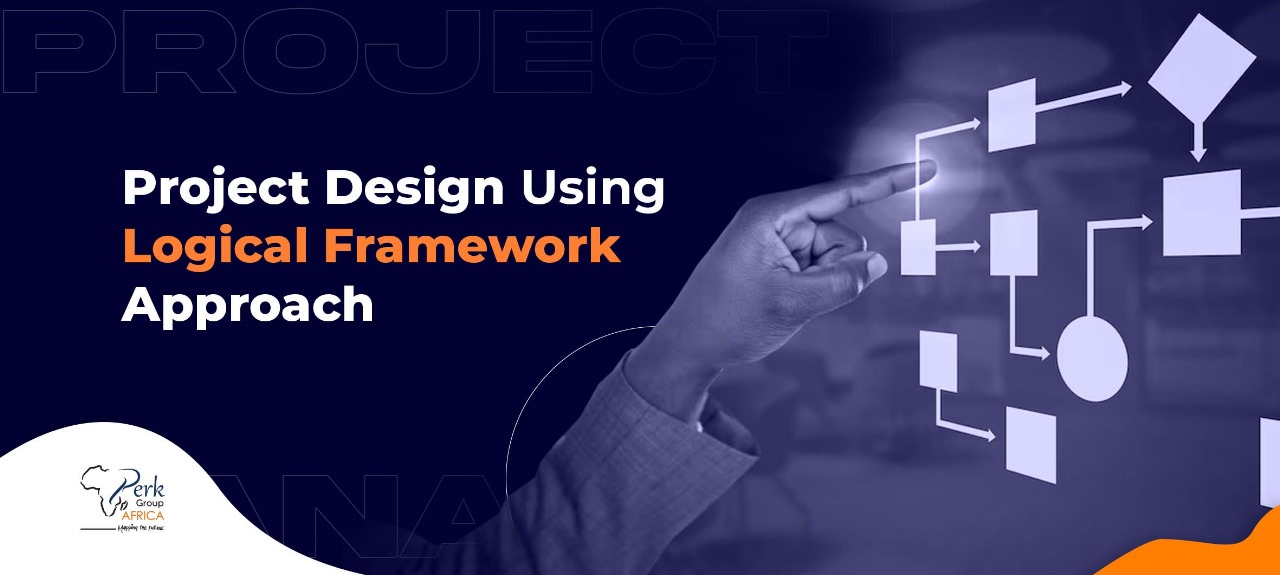
Training Course on Project Design using Logical Framework Approach
The Logical Framework Approach provides a comprehensive framework for project design by breaking down project objectives into manageable components, defining indicators for measuring success, id...
REGISTER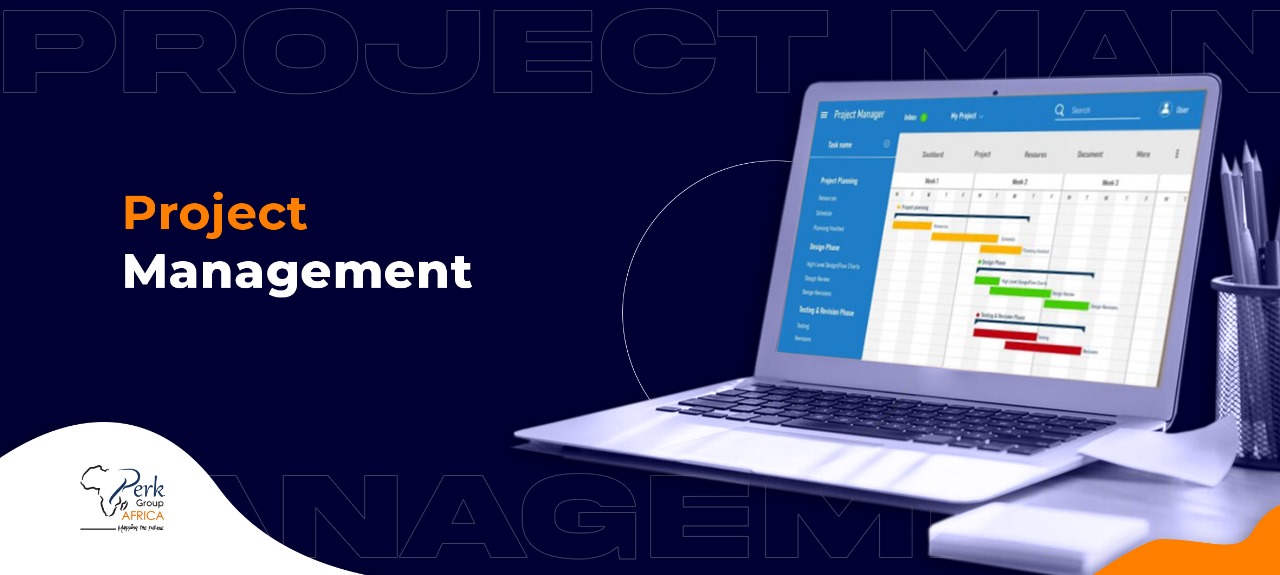
Training Course on Project Management
This course provides a comprehensive exploration of fundamental concepts, methodologies, and tools in project management. Participants will gain a solid understanding of the entire project lifecycle,...
REGISTER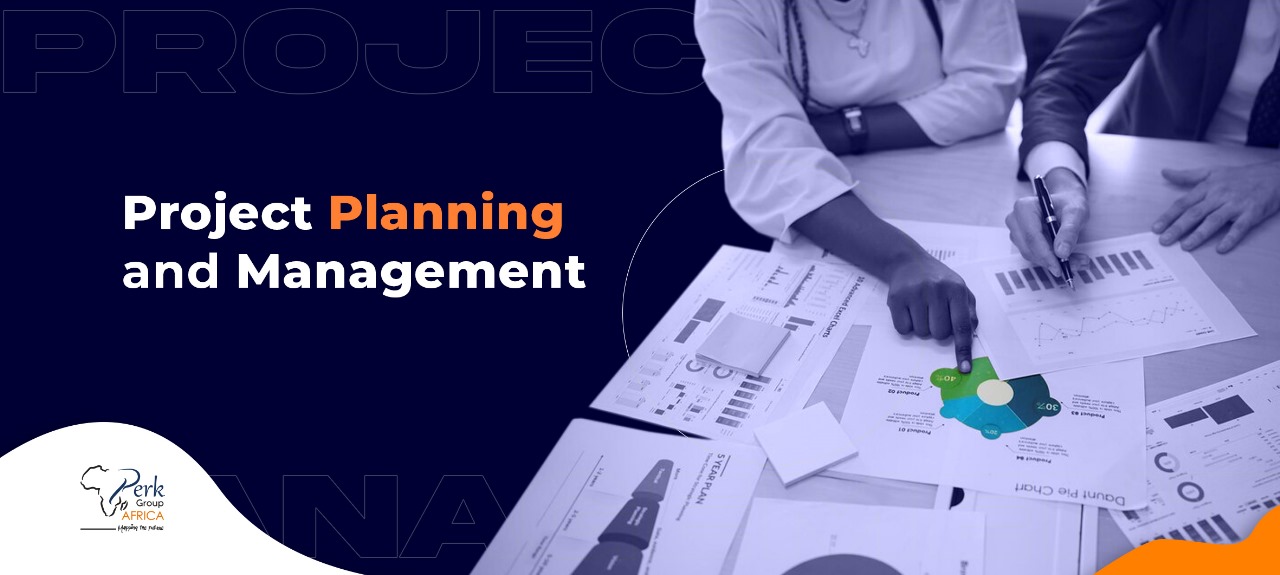
Training Course on Project Planning and Management
The Project Planning and Management course is a practical, results-driven program designed to equip professionals with the skills, tools, and strategies to successfully deliver projects across industr...
REGISTER
Training Course on Report Writing and Presentation Skills
This training course aims to equip participants with the essential skills required for effective report writing and presentation delivery. The course will cover various aspects of report writing...
REGISTER
Training Course on Resource Mobilization and Proposal Writing
In a world where ideas and initiatives have the power to create positive change, the ability to effectively mobilize resources and write compelling proposals is paramount. This course is designe...
REGISTER
Training Course on Results Based Management
This Results-Based Management course offers a concise and practical approach to understanding and implementing results-focused approaches in project and program management. This course is designed for...
REGISTER
Training Course on Training of Trainers
This course is designed to empower anyone who desires to develop skills with an aim to become a leader in delivering effective trainings, either as part of their role at place or work or independent p...
REGISTERProject Management — Key Concepts Explained
The definitions and frameworks our project management training is built on.
Project management in development is the application of structured planning, organising, executing and controlling techniques to deliver development or humanitarian outcomes within scope, time, budget and quality constraints. It draws on PMI/PMBOK, PRINCE2 and Agile traditions, but adapts them for the development context — donor compliance, multi-stakeholder coordination, beneficiary participation, theory of change. Strong project management balances technical delivery (work breakdown, scheduling, risk management) with stakeholder management, M&E, and financial control. Donors increasingly require formal project management qualifications for project lead positions.
The Logical Framework Approach (LFA), or LogFrame, is the most widely-used project planning and design tool in development. It structures a project on a 4×4 matrix: rows for goal → outcomes → outputs → activities, and columns for narrative, indicators, means of verification and assumptions/risks. LFA forces project teams to articulate causal logic ("if-then"), define measurable success, identify what could go wrong, and align stakeholders. It is required by EU, GIZ, UN agencies and most bilateral donors at proposal stage, and used as the management dashboard during implementation.
Results-Based Management is the management approach that aligns every project component — strategy, activities, resources, M&E — around delivering measurable results (outputs, outcomes, impacts) rather than just completing activities. It evolved from the UN system in the 1990s and is now the operating framework across multi-laterals, bilaterals and most large NGOs. Tools include results frameworks, performance scorecards, results-based budgeting, and management-for-results dashboards. RBM training equips project managers to write SMART results, design indicators, run results reviews, and report performance to donors and boards.
Proposal writing is the discipline of crafting a structured argument for funding that meets a specific donor's requirements — most often the EU PADOR/PROSPECT, USAID NOFO, FCDO ITT, or UN call for proposals. Strong proposals demonstrate fit with donor priorities, evidence-based problem analysis, a credible theory of change, achievable objectives, robust M&E plan, value-for-money, and the organisation's track record. The skill set blends strategic thinking, technical writing, financial modeling, and donor compliance knowledge. Win rates for unsolicited proposals are typically 5-15%; structured pre-positioning and competitive intelligence dramatically improve the odds.
Training of Trainers (ToT) is a methodology where experienced practitioners are trained both in subject content and in adult-learning facilitation skills, so they can then deliver training to others within their organisation or community. ToT cascades expertise efficiently — one ToT cohort of 20 can subsequently train hundreds. Effective ToT combines content mastery, learning theory (Kolb's experiential cycle, Bloom's taxonomy), session design, facilitation techniques, group dynamics management, and post-training mentoring. Donors and large programmes use ToT to scale capacity without proportionally scaling international consultants.
The project cycle is the conventional model of how development and humanitarian projects move from idea to closure — usually represented as identification → formulation → appraisal → financing → implementation → monitoring → evaluation → closure. Each phase has its own decision points, deliverables and stakeholder demands. The EU PCM (Project Cycle Management) and ADB/AfDB cycle frameworks are widely-used variants. Understanding the cycle helps project staff anticipate what's coming next, prepare deliverables in advance, and coordinate the cross-functional inputs (technical, M&E, finance, comms) each phase requires.