Training Course on Cost Estimation Budgeting and Cost Control (AFC004)
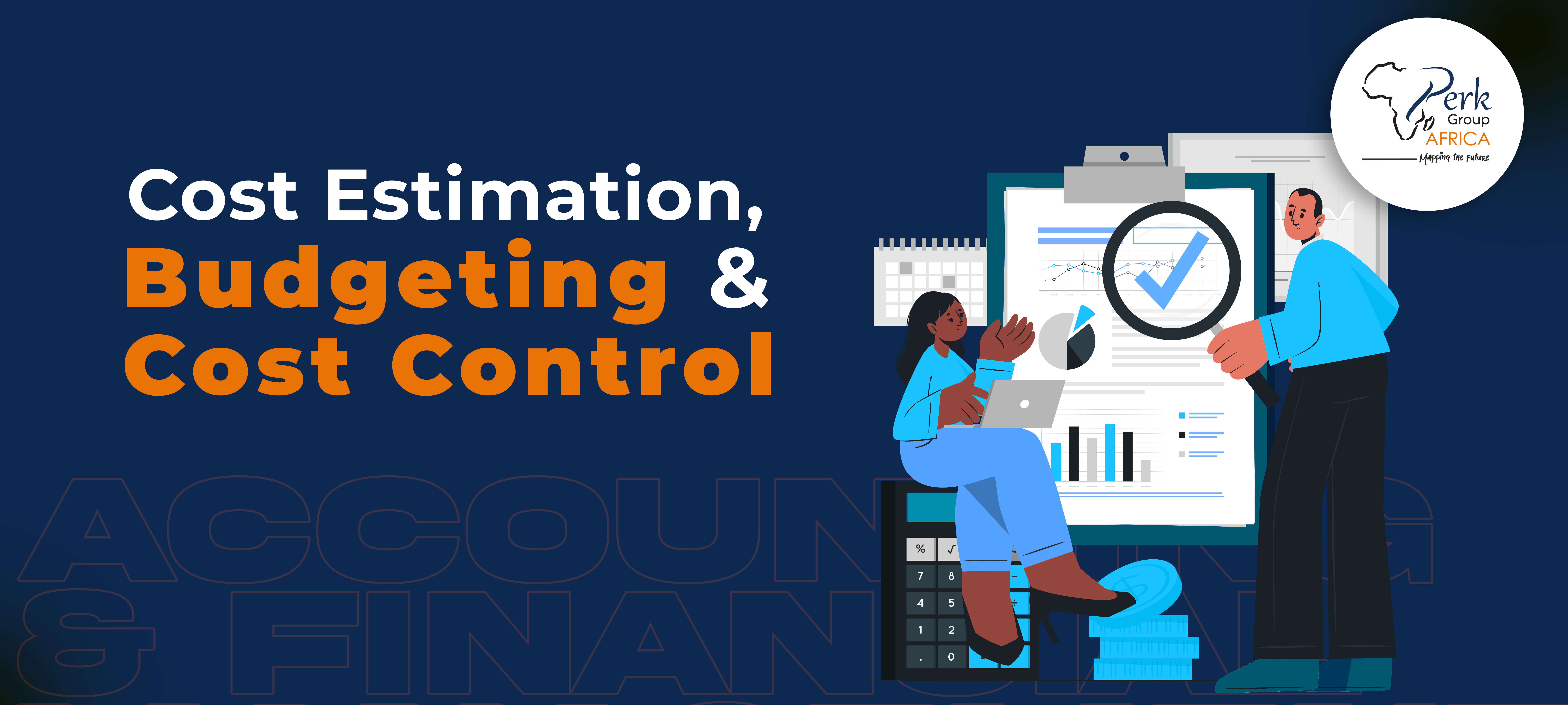
Training Course on Cost Estimation Budgeting and Cost Control
The Cost Estimation Budgeting and Cost Control training is designed to equip participants with the essential skills and knowledge required for effective cost estimation, budgeting, and cost control in various business environments. Through a combination of theoretical concepts, practical examples, and interactive exercises, participants will gain a thorough understanding of the key principles and best practices in managing costs throughout project lifecycles.
Course Duration
Online Training: 5 days (4hrs per day)
Classroom Training: 5 days (7hrs per day)
Course Objectives
By the end of this training, participants will be able to:
- Understand the principles and importance of cost management in project and organizational success.
- Differentiate between various types of cost estimates (Rough Order of Magnitude, Budgetary, and Definitive).
- Apply appropriate cost estimation techniques including parametric, analogous, and bottom-up estimating.
- Develop comprehensive and realistic project budgets.
- Monitor budgets effectively and implement corrective adjustments when necessary.
- Apply cost control tools such as Earned Value Management (EVM) and variance analysis.
- Implement structured change control procedures to manage cost deviations.
- Identify, assess, and mitigate cost-related risks.
- Utilize technology tools and software for cost estimation, budgeting, and reporting.
- Promote continuous improvement and best practices in cost management.
Organisational Impact
Organizations whose staff attend this training will benefit from:
- Improved Financial Planning Accuracy – More reliable cost estimates and budgets, reducing financial surprises.
- Enhanced Project Performance – Better alignment between scope, schedule, and budget.
- Reduced Cost Overruns – Stronger cost control mechanisms and early detection of variances.
- Better Risk Management – Proactive identification and mitigation of financial risks.
- Improved Accountability and Transparency – Clear reporting systems and performance tracking.
- Stronger Decision-Making – Data-driven financial analysis to guide strategic decisions.
- Efficient Resource Utilization – Optimal allocation and monitoring of financial and material resources.
- Adoption of Modern Cost Management Tools – Improved integration of software and technology into financial processes.
- Establishment of a Cost Management Culture – Continuous improvement practices embedded within the organization.
Personal Impact
Participants will gain:
- Strong Analytical Skills – Ability to prepare, analyze, and interpret cost data confidently.
- Practical Estimation Expertise – Hands-on experience applying different estimation techniques.
- Budget Development Competence – Skills to design and manage realistic and flexible budgets.
- Advanced Cost Control Skills – Knowledge of EVM, variance analysis, and change management processes.
- Risk Assessment Capabilities – Ability to identify financial risks and implement mitigation strategies.
- Technology Proficiency – Familiarity with tools such as MS Project, Primavera, SAP, and advanced spreadsheet techniques.
- Improved Reporting & Communication Skills – Ability to present financial information clearly to stakeholders.
- Increased Professional Credibility – Enhanced career prospects in project management, finance, procurement, and operations roles.
- Confidence in Managing Complex Projects – Practical exposure to real-world case studies and simulations.
Course Outline
Module 1: Introduction to Cost Management
- Understanding the Importance of Cost Management
- Overview of Cost Estimation, Budgeting, and Cost Control
- Role of Cost Management in Project Success
Module 2: Cost Estimation Techniques
- Overview of Cost Estimation
- Types of Cost Estimates (Rough Order of Magnitude, Budgetary, Definitive)
- Parametric Estimating
- Analogous Estimating
- Bottom-Up Estimating
- Case Studies and Practical Exercises
Module 3: Budgeting Fundamentals
- Importance of Budgeting in Project Management
- Types of Budgets (Fixed, Flexible, Rolling, Incremental)
- Developing a Project Budget
- Budget Monitoring and Adjustments
- Real-life Budgeting Challenges and Solutions
Module 4: Cost Control Strategies
- Principles of Cost Control
- Earned Value Management (EVM)
- Variance Analysis
- Change Control Procedures
- Reporting and Communication in Cost Control
Module 5: Risk Management in Cost Management
- Identifying and Assessing Cost Risks
- Developing a Risk Management Plan
- Mitigating Cost Risks
- Integrating Risk Management with Cost Control
Module 6: Technology Tools for Cost Management
- Introduction to Cost Management Software
- Demonstration of popular tools (e.g., Microsoft Project, Oracle Primavera, SAP)
- Utilizing Spreadsheets for Cost Analysis
- Integrating Technology into Cost Control Processes
Module 7: Case Studies and Practical Applications
- Real-world Case Studies on Successful and Challenging Cost Management
- Group Exercises and Simulations
- Peer Review and Feedback
Module 8: Continuous Improvement in Cost Management
- Lessons Learned and Continuous Improvement
- Benchmarking Best Practices
- Establishing a Cost Management Culture
- Professional Development in Cost Management
Note: The specific content, activities, and duration of each session may be adjusted based on the target audience, learning objectives, and available time.
Course Language
English
Training Methodology
This course adopts a practical, participatory, and results-oriented learning approach, including:
- Interactive Lectures – Clear explanation of concepts, frameworks, and best practices.
- Hands-on Practical Exercises – Real-life cost estimation and budgeting exercises.
- Case Studies – Analysis of successful and challenging cost management scenarios.
- Group Work and Simulations – Collaborative problem-solving activities.
- Software Demonstrations – Practical exposure to cost management tools and spreadsheets.
- Variance Analysis Workshops – Practical application of Earned Value Management techniques.
- Peer Review & Feedback Sessions – Structured feedback to strengthen learning outcomes.
- Action Planning Sessions – Participants develop practical strategies to implement in their organizations.
Certification
Upon completion of training, the participant will be issued with a certificate of Completion.
Frequently Asked Questions
Common questions about the Training Course on Cost Estimation Budgeting and Cost Control course.
Cost estimation is the process of forecasting how much a project, programme or activity will cost — from initial rough order of magnitude estimates at concept stage through to detailed bottom-up budgets at proposal stage. Methods include analogous estimation (using similar past projects), parametric estimation (mathematical formulas based on quantities), bottom-up estimation (summing detailed line items), and three-point estimation (PERT: optimistic, most-likely, pessimistic). Strong cost estimation prevents budget overruns at implementation and protects donor relationships and organisational reputation.
Building a project budget from cost estimates involves grouping cost estimates into donor-required budget categories, time-phasing them across the project period (when each line item will be spent), adding contingency for risk, applying organisational indirect cost rates, and reconciling with the donor's prescribed budget template. Most NGOs use Excel to develop project budgets before transferring final figures into accounting systems. Strong budgets explicitly link to the work breakdown structure (WBS) and the LogFrame so cost-to-result alignment is visible.
The main cost-control techniques include earned value management (comparing planned vs actual vs work completed), variance analysis (investigating differences between budget and actuals), commitment accounting (tracking purchase orders before invoices arrive), procurement controls (approval thresholds, competitive sourcing), and burn-rate monitoring (forecasting completion costs based on current spend trajectory). For donor-funded projects, cost-control techniques must produce reports compatible with each donor's reporting format — making integration of project management and accounting data critical.
Project managers, cost engineers, quantity surveyors, PMO analysts, and procurement professionals in construction, engineering, consulting, donor-funded infrastructure, and manufacturing. Programme managers in NGOs running infrastructure components also benefit.
Parametric, analogous and bottom-up cost estimation; work breakdown structure (WBS) costing; contingency and management reserves; earned value management (EV, PV, AC, CPI, SPI); variance analysis; and change control procedures.
Basic familiarity with project planning and WBS is expected. You do not need a PMP qualification. Participants range from cost estimators just entering the profession to senior project managers formalising their cost control practice.
Online and in-person cohorts. Both formats issue the Perk Group Africa certificate of completion with a verification code, accepted for CPD records across the engineering, construction and development sectors.
Related Courses
Explore more courses in Accounting & Financial Management