
Strategic Management
About our Strategic Management training
Perk Group Africa offers strategic management training for leaders, managers and emerging executives across Africa. Courses cover Change Management (Kotter, ADKAR), Entrepreneurship and business planning, Leadership & People Management for modern workplaces, Stakeholder Engagement, and Data-Driven Decision Making. Frameworks are drawn from current organisational development research and adapted for African operating contexts — government, NGO, corporate and early-stage SMEs. Participants are new managers, HR and OD practitioners, programme directors, founders and team leads ready to move from executing to steering. Every cohort runs online (live-instructor-led over Zoom) and in-person at our training venues across Nairobi, Kigali, Mombasa, Lagos, Cape Town, Addis Ababa, Juba, Cairo and Dubai, with a Perk Group Africa certificate of completion recognised for CPD by humanitarian, development and private-sector employers.
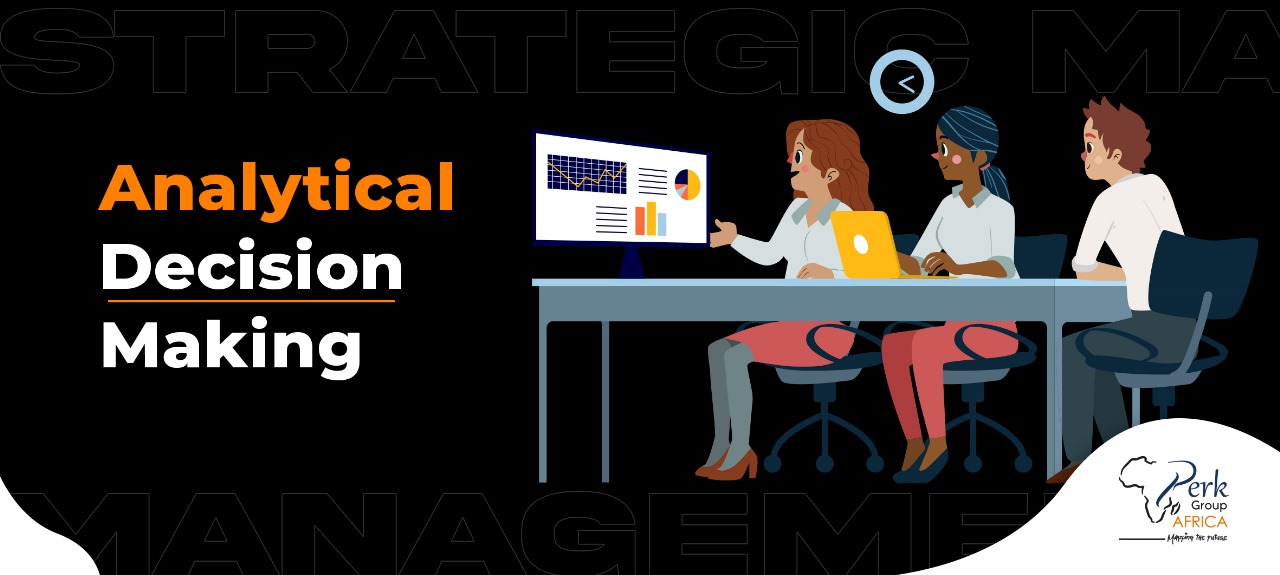
Training Course on Analytical Decision Making
This course is designed to help the participants with analysis skills in the business context. It will help in evaluation of management situations faced by managers in organizations. The course emphas...
REGISTER
Training Course on Change Management
Change is the only constant that we can rely on in the business world. It is critical that organizations understand change, promote change, cope with change, and value change. Change is often needed s...
REGISTER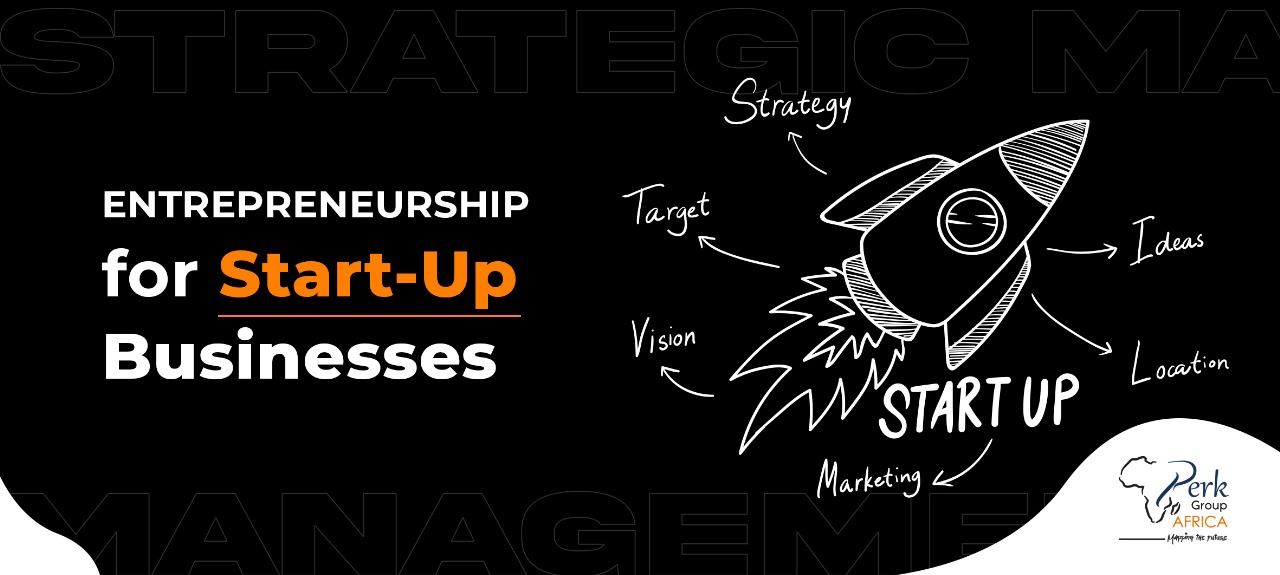
Training Course on Entrepreneurship for Start-Up Businesses
This course is designed for those interested in starting their own business, either as their primary income or extra income while still employed. The course is centered on three major aspect whi...
REGISTER
Training Course on Leadership and People Management
Our course is specially designed to provide participants with skills required to lead any team in the organization successfully.
REGISTER
Training Course on Stakeholder Management and Engagement
In the world that we are living in, being able to manage the different stakeholder groups is key to being able to sustain the business. Stakeholders have become an integral part in the operations of t...
REGISTERStrategic Management — Key Concepts Explained
The definitions and frameworks our strategic management training is built on.
Strategic management is the structured process by which organisations set long-term direction, align resources to achieve it, and adapt to changing internal and external conditions. It covers vision and mission setting, environmental scanning, strategy formulation, implementation through KPIs and balanced scorecards, and continuous review. In the development and humanitarian sectors, strategic management is increasingly demanded by boards, donors and government regulators — most multi-year donor agreements now require an organisational strategic plan, theory of change, and measurable strategic priorities to release funding.
Change management is the structured approach to transitioning individuals, teams and organisations from a current state to a desired future state — restructuring, new technology adoption, programme expansion, leadership transition. The Kotter 8-step model, ADKAR and Lewin's Unfreeze-Change-Refreeze are the most widely-applied frameworks. Most change initiatives fail not because the strategy is wrong but because the human side is neglected: unclear case for change, weak coalition of leaders, no early wins, inadequate communication. Strong change management practice converts plans into adopted behaviours and sustained results.
Leadership development is the deliberate process of building managers' capacity to set direction, inspire teams, manage performance, and influence stakeholders — distinct from management training, which focuses on processes and tools. Effective programmes combine self-awareness (360 feedback, personality and emotional intelligence assessments), foundational leadership theory (situational leadership, transformational leadership, servant leadership), and applied skills (coaching, delegation, feedback, difficult conversations). Most NGO and government leadership pathways now expect a combination of formal training, mentoring and stretch assignments rather than a single course.
Stakeholder management is the discipline of identifying, analysing and engaging with the individuals and groups who affect or are affected by an organisation's work — communities, donors, government, partners, staff, beneficiaries. Tools like the power-interest matrix, stakeholder analysis grid and engagement plan map influence and prioritise effort. Strong stakeholder engagement underpins programme legitimacy, donor confidence and risk management. The IAP2 spectrum (Inform → Consult → Involve → Collaborate → Empower) helps teams choose the right level of engagement for each stakeholder group.
Analytical decision-making is the structured process of choosing between alternatives by gathering relevant data, applying analytical frameworks, weighing trade-offs and documenting the rationale — instead of relying on intuition or hierarchy alone. Common tools include cost-benefit analysis, decision trees, multi-criteria analysis, and risk-adjusted return calculations. In development programming, analytical decision-making is increasingly important for portfolio prioritisation, intervention selection during evaluation, and fund allocation under tight donor scrutiny. Boards and donors expect decisions to be defensible with documented evidence and reasoning.
Entrepreneurship is the process of identifying a market opportunity, mobilising resources to address it, and creating value through a new business or social enterprise. Lean startup methodology — build, measure, learn — has largely replaced traditional business-plan-first approaches for early-stage ventures. Key competencies include opportunity recognition, customer discovery, financial modeling for early-stage businesses, fundraising, and team building. In Africa, entrepreneurship training is often combined with social enterprise frameworks where impact metrics (jobs created, livelihoods supported, communities served) sit alongside financial sustainability.